THE TRAVELER AND THE TOMATO
These Twofer Tuesday posts usually happen after I encounter a vehicle and remember that I took pics of a similar one months before. However this time I passed these 2 rides within days of each other. Without further ado;

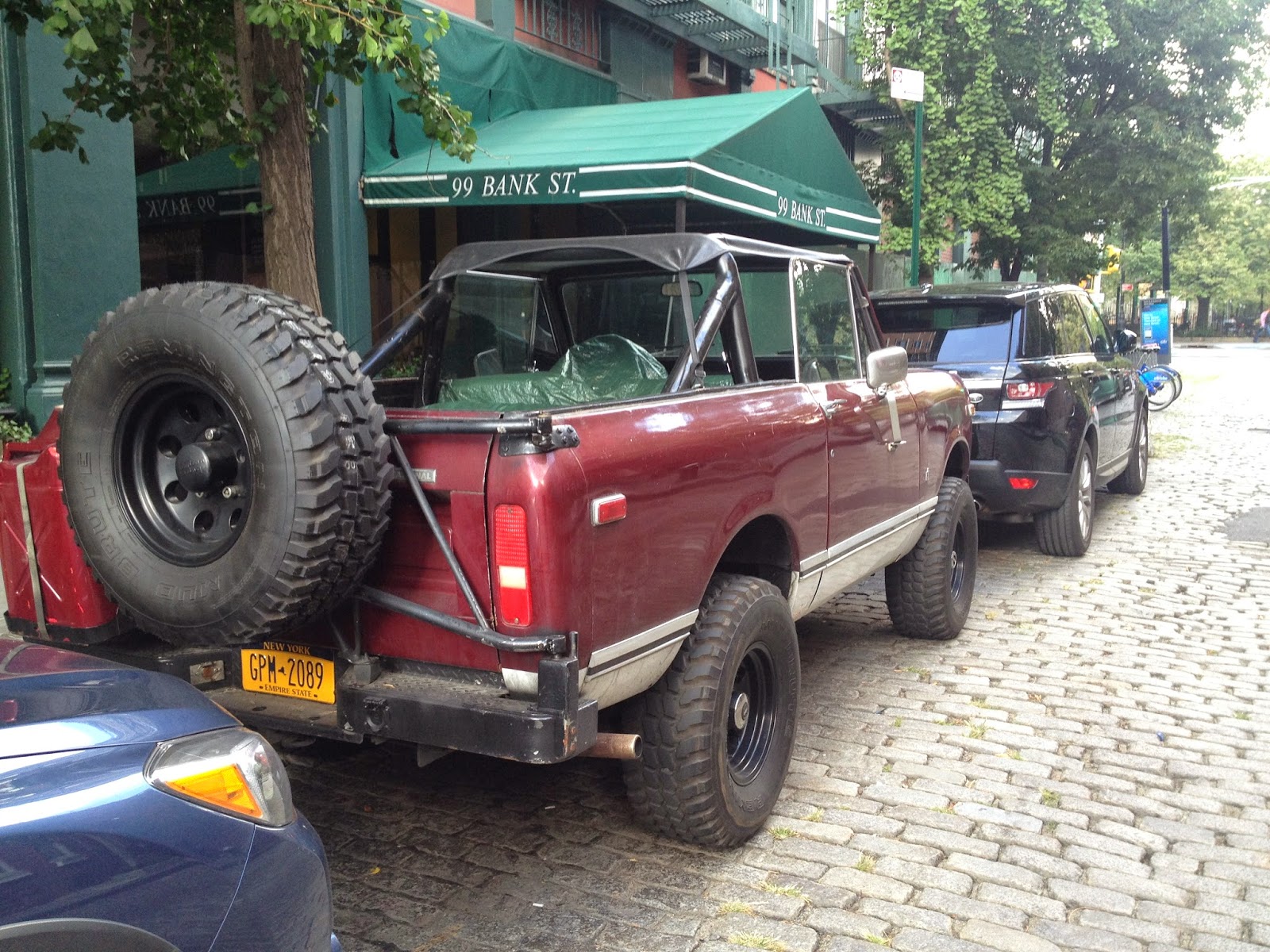
High up on the hill in tony Park Slope I ran across the least expected vehicle ever for its surroundings. This is a 1977 International Scout II in Fire Orange.

International got its start back in 1902 making agricultural equipment such as tractors and threshers. Soon after it began manufacturing trucks for farm and commercial use. Finally in the '60s it came out with the original Scout, meant to compete directly with Jeep. This is the larger, second evolution.

I owned a '79 that looked identical to this, save the color and condition. They are fantastic trucks!

These trucks want to rust so bad that it's almost impossible to hold it off. This one is pretty cherry and obviously well loved by someone.

No "shift on the fly" 4-wheel-drive here! To engage the 4x4 you need to get out of the truck and manually lock each front hub before jumping back in and using the separate transfer case shifter to select either 4 High or 4 Low. I only engaged 4 Low once in my old Scout to make sure it worked but it was basically undriveable with a top speed of something like 20 mph. Good for pulling stumps maybe.

This entire roof comes off making for a hilarious summer vehicle. The roof is metal and weighs plenty I can tell you from experience.

These beasts are super basic. From this angle you can see the front door glass is just a flat square.

The drivetrain on the Scouts is bulletproof, befitting a company that made its reputation building tractors. The engine blocks are some of the heaviest ever produced at 800lbs! They never bothered with any technology to lighten the motor so it never wears out. Scouts are known to go 300,000 miles as long as their body holds up.

Looking bizarre in a neighborhood of brownstones and mansions.

Inside we can see that this is a manual 4 speed like mine was. This one also has air conditioning as shown by the vents under the dash.

The ride height is only a touch higher than factory. Combined with the larger tires you can see how this towers over the Honda behind it.

The "Town of East Hampton" sticker on the bumper goes a long way in explaining why some colossal beach cruiser is parked in Brooklyn.

I had to get a close up of the winch, not because I know anything about winches, but because you never see one in NYC.
Now on to a more laid back version . . .

Sweet! This beast is dressed down and ready for action. What we have here is a 1976 Scout Traveler in Winter White.

You just saw how East Hampton rolls, but this is what an honest Scout is supposed to look like; rusty as hell, topless, and parked just anywhere without a single thought to security.

The Traveler is a full 18 inches longer than the Scout II. You can see the extra space between the door and the rear wheel well. The top for the Traveler is fiberglass with a slanted hatchback but who needs that on a hot week like this?

My Scout came with a full roll cage built into it and it's rare to see one without even a roll bar. They are so capable off-road but if you manage to flip it over only the puniest of windshield frames will be there to try and save your head.

There is a backseat in this ride but it's basically a flat bench with zero headrests.

I'm confused by something on this rig which maybe somebody can help me with. From this angle it looks to have 2 gas tanks; not uncommon on a truck from the age of very low mpg. However, the front gas cap is mimicked on the passenger side as well. While there were a few trucks built in the '70s with a 3 gas tank option I couldn't find any reference to it in Scout literature. This is the sort of thing you want if you're going on some mammoth off road adventure and you need a 500+ mile range. Were the fronts actually antennae mounts or something? Who knows!
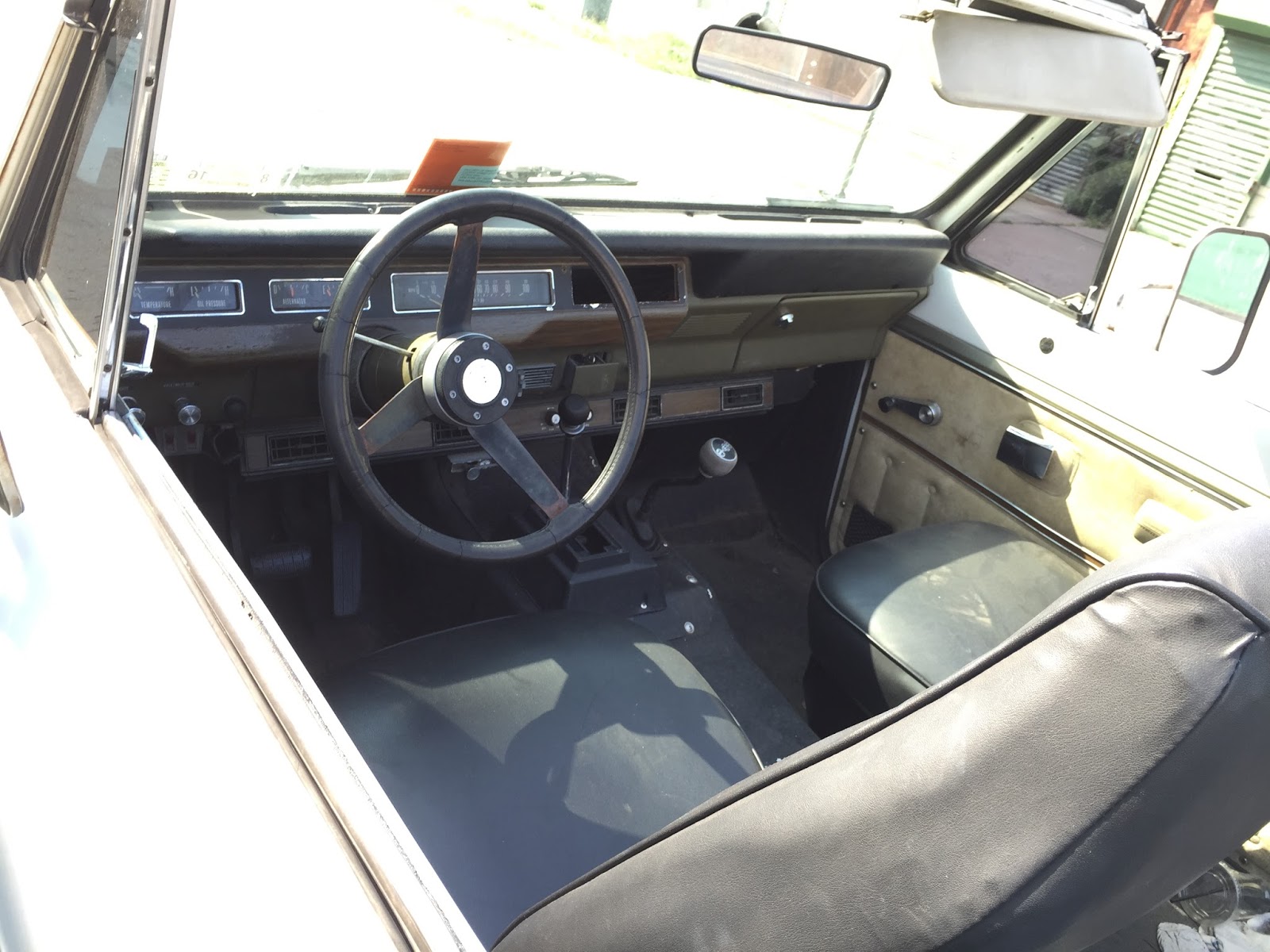
Straight-up basic Scout interior with no radio and an automatic trans. This, too, has the air conditioner though. The passenger is lucky as they get the only visor.

"Better than the floor" is how you'd describe this seat if you were in it.

This proud donkey was flouting the law out in Red Hook where parking is such a non-issue that only sheer absent-mindedness gets you a ticket. Then again, whoever owns a convertible with no roof in sight must be pretty relaxed.

That about does it for the Scout roundup today. It is almost impossible to discern the vintage of Scouts except for the grills, which changed almost every year. the Traveler was introduced in '76 so this is the first. In 1979 International went through a debilitating strike lasting over a year which brought the company to its knees. By the time it was over they basically assembled the 1980 Scouts with parts they'd already made and closed their light truck division for good. If you see a Scout with square headlights you're looking at a rarity as it is the fabled 1980 model.